
RV Paint Protection: Ceramic Coating, Wax, and Long-Term Care
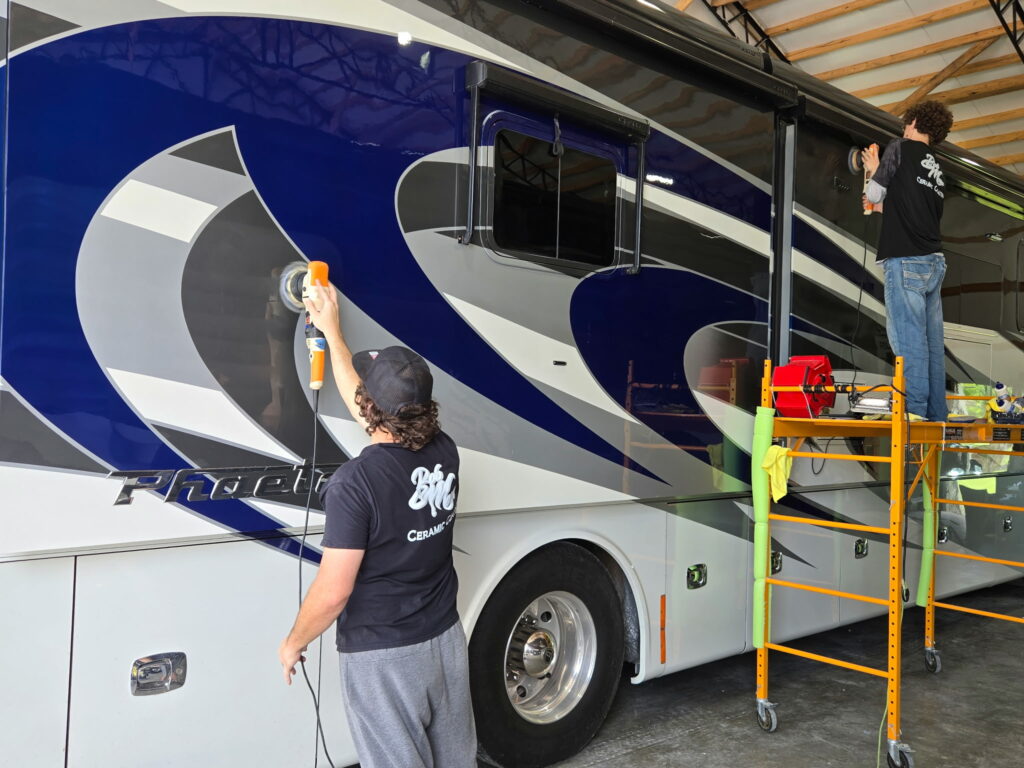
RV Paint Protection
RV paint protection does more than regular washing. Sun, debris, sap, and droppings can dull paint and damage gelcoat over time. Many owners use wax or ceramic coatings, but claims vary, so it’s important to understand what each option delivers.
This article compares ceramic vs wax, outlines DIY and professional costs, and highlights products owners commonly discuss to help you choose what fits your RV and budget.
Why RV Paint Protection Matters
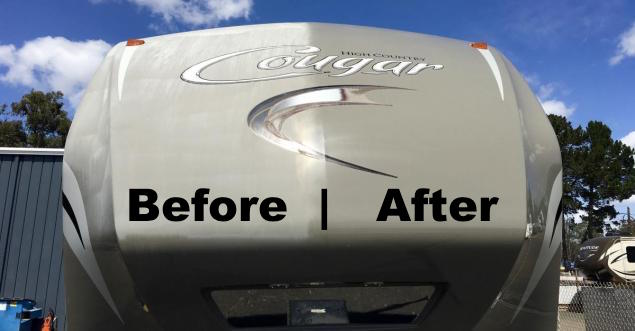
RV paint protection matters because constant sun, moisture, salt, and dust break down the finish over time. Without protection, paint fades, stains, and becomes harder to clean. A protective layer acts as a barrier against these elements.
The two main options are wax and ceramic coatings. Wax is traditional and widely used, while ceramic is newer and known for longer life and water resistance. Each differs in cost, effort, and performance.
Ceramic Coating vs. Traditional Wax: Key Differences
To help you compare the two approaches, the table below summarizes the main points found in product descriptions and user discussions.
Factor | Ceramic Coating | Traditional Wax |
|---|---|---|
Longevity claim | 18 months to 5 years depending on product and storage | Typically 1–3 months before needing reapplication |
Gloss improvement | Manufacturers claim up to 35% more gloss than wax (Glidecoat) | Moderate gloss that fades as the wax wears off |
Application difficulty | Requires thorough paint prep; often professional installation recommended | Can be applied by hand in a few hours |
Cost | DIY kits $350–$800; professional installation from $75 per foot | $20–$60 per bottle or paste |
Maintenance | Some products need periodic boosters (e.g., R1 Revive every 3–6 months) | Regular reapplication required |
Protection from elements | Hydrophobic, resists UV, hard water spots, ocean spray, and road grime | Basic water beading, limited UV protection |
Paint preparation critical | Yes – many owners stress that proper prep is key (iRV2 forum) | Less critical, but paint should be clean |
Glidecoat says its ceramic coating fills gelcoat pores and bonds to the surface, lasting much longer than wax. RV Complete claims its Exterior Shield lasts up to five years with no reapply and is heat tested above 500°F. Results vary based on use and storage.
iRV2 users are split. Some find regular wax like NuFinish works fine, while others prefer ceramic to cut down on waxing. Most agree ceramic helps reduce upkeep, but proper prep is critical.
DIY Ceramic Coating Options
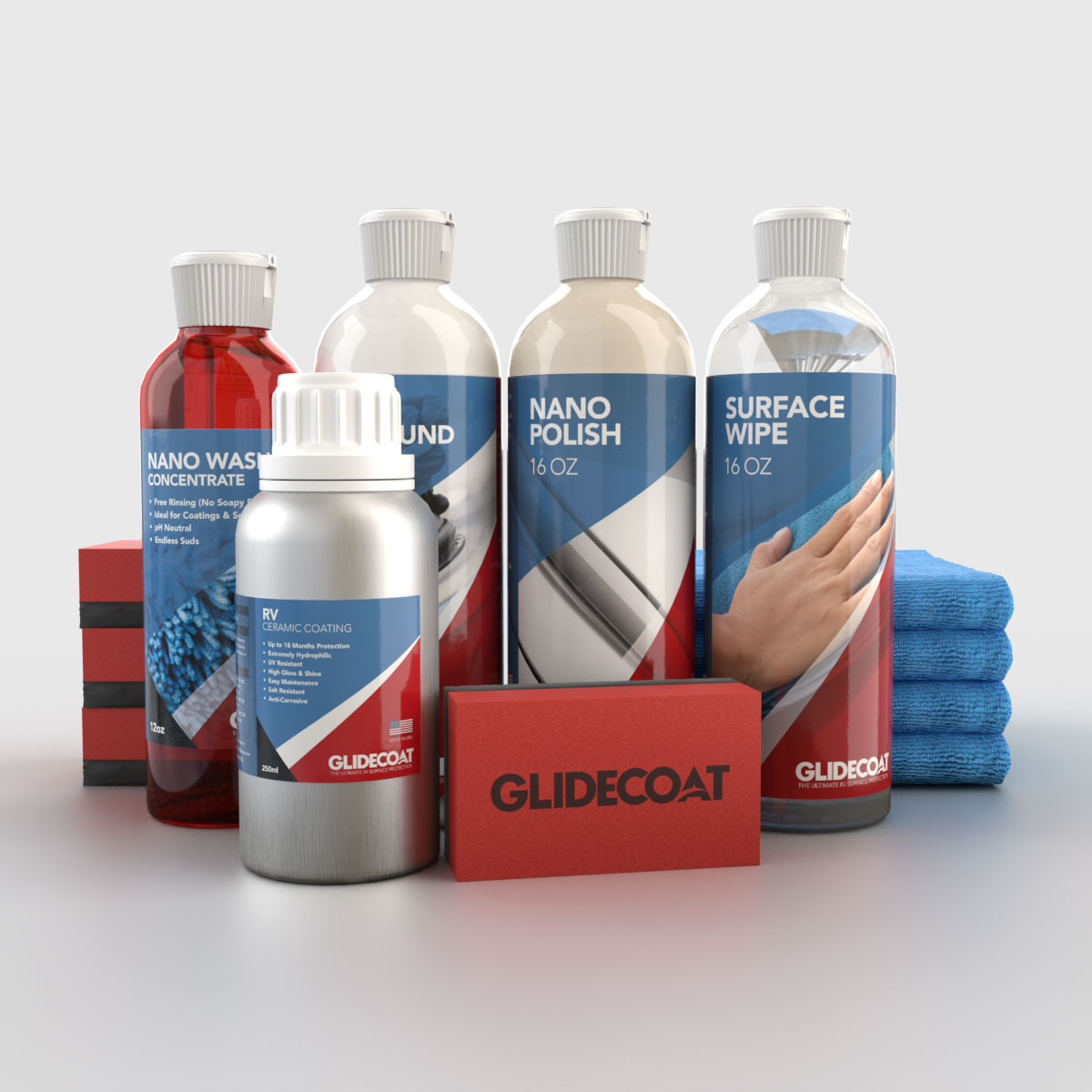
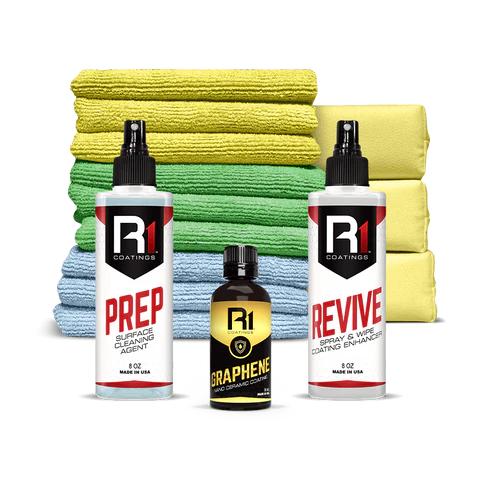
Several companies sell ceramic coating kits designed for RV owners who want to apply the coating themselves. These kits typically include a cleaning solution, applicator, and the coating liquid.
R1 Coatings
R1 Coatings offers two main packages for RVs and trailers. The Street RV/Trailer Package covers vehicles up to 28 feet for $349.95, and up to 48 feet for $685.95. The Graphene RV/Trailer Package, which uses their Graphene Nano Ceramic Coating, costs $409.95 for up to 28 feet and $805.95 for up to 48 feet. The company describes the graphene version as the hardest and longest-lasting coating yet, with 9H hardness and super hydrophobic properties. To maintain the coating, R1 offers Revive, a product that enhances hydrophobicity for 3 to 6 months.
Glidecoat
Glidecoat’s ceramic coating bonds to RV gelcoat and fills surface pores. It offers at least 18 months of protection, with longer life based on use and storage. The company claims up to 35% more color and gloss than wax. It’s also DIY-friendly and requires no special equipment.
RV Complete
RV Complete offers a simpler approach with its Paint & Fabric Protection line. These products are VOC-free, solvent-free, non-flammable, and water-based. The Exterior Shield is a polymer coating rated to last up to five years with no reapply and tested above 500°F. They also offer an interior treatment that kills 99% of microbes, appealing to owners who want a low-tox option.
Professional Ceramic Coating Services
Some RV owners prefer to have the coating applied by a professional to ensure proper surface preparation and even application. Professional services typically include a thorough buff and polish before applying the coating.
Waxed Up
Waxed Up offers a professional ceramic coating package for RVs starting at $75 per foot. This package includes buff and polish, a 9H ceramic coat, and a topcoat warranty for either 3 or 5 years. At that price, a 30-foot RV would cost $2,250 for the full treatment. That is a significant investment, but it includes labor and a warranty that backs the work.
Nano Pro Ceramic
Nano Pro Ceramic offers a coating specifically for RV gelcoat with a 3-year warranty. The company presents it as the best choice for RV exterior paint protection. As with other professional options, the cost is higher than DIY, but the warranty provides peace of mind for owners who want long-term coverage without the hassle of application.
RV Wholesalers
While not a coating product itself, RV Wholesalers offers a protection plan called Platinum Ultimate Plus Protection. This plan covers weather-induced fading, loss of gloss, hard water spots, and ocean spray. It is a different kind of protection: a service contract rather than a physical coating, but it addresses similar concerns about paint degradation.
Maintenance and Long-Term Care
No paint protection is maintenance-free. Ceramic coatings cut waxing but still need care. Products like R1 Revive help restore water beading every 3–6 months, and regular washing and checks are still needed.
Storage matters. Covered or indoor RVs face less sun and dirt, helping protection last longer. RVs in harsh sun or rain may need more upkeep.
Prep is key. Without proper cleaning, coatings won’t bond and can fail early. Pros often include paint correction, which adds cost but improves results.
Frequently Asked Questions
Is RV paint protection worth the cost?
It depends on your priorities. Regular wax is cheap and works well for many owners. Professional ceramic coatings cost hundreds or thousands of dollars but can reduce maintenance and provide longer-lasting protection. Forum opinions vary, so it is best to weigh your budget, how often you use your RV, and how much time you want to spend on upkeep.
Can I apply a ceramic coating myself?
Yes, DIY kits from R1 Coatings and Glidecoat are available. They require careful prep and close attention to instructions. Many owners get good results, but some report streaks or uneven finish. If prep isn’t done right, a professional install may be the safer choice.
How long does ceramic coating last on an RV?
Manufacturer claims range from 18 months to 5 years, but real life varies based on sun, storage, washing, and road debris. Indoor storage helps coatings last longer. Reapply or use boosters after a few years.
What is the difference between ceramic coating and wax?
Ceramic coating bonds to paint and forms a hard, water-repellent layer, while wax sits on top and wears off faster. Ceramic can last years; wax usually lasts a few months. Ceramic also protects better from UV and stains but costs more and needs more prep.
No option fits every RV. The right choice depends on your budget, time, and desired protection. Wax is simple and low-cost, while ceramic—DIY or pro—offers longer-lasting results. Either way, regular cleaning and early repairs keep your RV looking its best.